Treating head and neck cancer has advanced significantly over the years, with newer surgical techniques offering better precision and faster recovery for suitable patients. One such innovation is Transoral Robotic Surgery (TORS), a minimally invasive approach that allows surgeons to remove certain tumours through the mouth without making large external incisions.
TORS has become an important treatment option for selected cancers affecting the throat, tonsils, and base of the tongue. While it is not appropriate for every patient, it offers several advantages when recommended after careful evaluation. Understanding how this procedure works can help patients discuss treatment options more confidently with their healthcare team.
What Is Transoral Robotic Surgery?
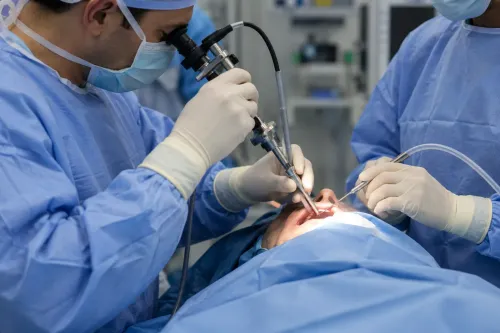
Transoral Robotic Surgery is a minimally invasive surgical technique in which specially designed robotic instruments and a high-definition camera are introduced through the mouth. The surgeon controls these robotic arms from a console, allowing precise movements in areas that are often difficult to access using conventional surgery.
Despite the name, the procedure is not performed independently by a robot. Every movement is directed by the surgeon, who remains in complete control throughout the operation.
TORS is most commonly used for carefully selected cancers involving:
- The tonsils
- The base of the tongue
- The oropharynx
- Certain benign tumours of the throat
Whether someone is a suitable candidate depends on the size, location, and stage of the tumour, along with their overall health.
How Does TORS Differ from Traditional Surgery?
Traditional surgery for some throat cancers may require external incisions through the neck or jaw to reach the tumour. While these procedures remain necessary in many situations, TORS provides an alternative for selected cases by accessing the tumour directly through the mouth.
This approach can reduce disruption to surrounding healthy tissues while still allowing complete tumour removal when appropriate.
The decision between TORS and conventional surgery is always based on detailed imaging, tumour characteristics, and multidisciplinary evaluation.
Key Benefits of Transoral Robotic Surgery
No Large External Incisions
Because the tumour is removed through the mouth, patients usually avoid visible scars on the face or neck. This can improve cosmetic outcomes while reducing wound-related complications.
Greater Surgical Precision
The robotic system provides magnified three-dimensional visualisation and highly controlled instrument movement. This enables surgeons to work accurately within the narrow spaces of the throat.
Reduced Blood Loss
The precision offered by robotic instruments may help minimise damage to surrounding tissues, which can contribute to reduced bleeding during surgery in suitable cases.
Faster Recovery
Many patients experience a shorter hospital stay and quicker return to daily activities compared with more extensive open surgical procedures, although recovery varies depending on the complexity of treatment.
Improved Swallowing Function
Preserving healthy tissue whenever possible may support better swallowing outcomes after surgery. Many patients are able to resume oral intake earlier than expected, although rehabilitation requirements differ from person to person.
Lower Risk of Certain Complications
Avoiding large surgical incisions may reduce the risk of wound infections, delayed healing, and some complications associated with open surgery.
Who May Be a Good Candidate?
TORS is not suitable for every patient with head and neck cancer.
Doctors consider several factors before recommending the procedure, including:
- Tumour size
- Exact location of the cancer
- Extent of tumour spread
- Airway anatomy
- Overall medical fitness
- Previous treatments such as radiation therapy
Comprehensive evaluation ensures that patients receive the treatment most likely to provide the best outcome for their individual condition.
What Happens Before the Procedure?
Before surgery, patients typically undergo several investigations to accurately assess the cancer.
These may include:
- Flexible endoscopic examination
- CT scan or MRI
- PET-CT in selected cases
- Tissue biopsy
- Blood investigations
- Anaesthetic assessment
These tests help determine whether TORS is technically feasible and oncologically appropriate.
Recovery After TORS
Recovery varies depending on the extent of surgery and whether additional treatments such as radiation therapy or chemotherapy are required.
Following surgery, patients may experience:
- Mild to moderate throat pain
- Temporary swallowing discomfort
- Changes in speech for a short period
- Fatigue during recovery
Doctors generally recommend:
- Soft foods during the initial healing period
- Adequate hydration
- Pain management as prescribed
- Regular follow-up appointments
- Speech and swallowing therapy if required
Many patients gradually resume their normal routine as healing progresses.
Is TORS Always the Best Option?
Although TORS offers several advantages, it is not automatically the best treatment for every patient. Larger tumours, cancers involving surrounding structures, or advanced-stage disease may require conventional surgery, radiation therapy, chemotherapy, or a combination of treatments.
The choice of treatment should always be individualised after discussion within a multidisciplinary cancer team.
Accessing Advanced Head and Neck Cancer Care in Chennai
Patients in Chennai, including Kovilambakkam, Pallikaranai, Velachery, Tambaram, and Pallavaram, can benefit from specialised evaluation when exploring treatment options for head and neck cancer. Careful assessment helps determine whether advanced techniques such as Transoral Robotic Surgery are appropriate based on the patient's diagnosis and overall health.
The Face Clinic provides comprehensive care for head and neck conditions, including cancer evaluation, reconstructive surgery, and personalised treatment planning. Individuals seeking to understand available treatment options can also visit faceclinicchennai.com for additional information before consulting a specialist.
Advances like Transoral Robotic Surgery have expanded treatment possibilities for many patients. When used in appropriately selected cases, TORS can combine effective cancer treatment with minimally invasive surgery, supporting recovery while preserving important functions such as speech and swallowing.
Keywords