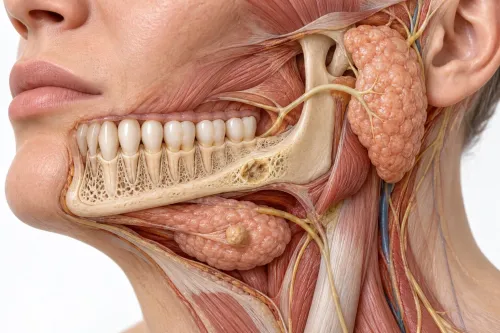
A locked jaw is a symptom, not a diagnosis: the cause may be a displaced disc, muscle spasm, arthritis, trauma, ankylosis, infection or post-treatment scarring. By the end, you will know which findings call for urgent care, what tests distinguish these causes, when non-surgical treatment is reasonable and when a named TMJ operation deserves consideration.
Key takeaways
- An open lock needs urgent medical assessment; a closed lock is not always an emergency.
- Diagnosis combines jaw-opening measurements, bite history, examination and targeted imaging.
- Try appropriate non-surgical treatment first when there is no fracture, infection or destructive joint disease.
- Choose surgery based on the cause, such as disc displacement, adhesions, arthritis or joint fusion.
What kind of jaw lock do you have, and when is it urgent?
Intermittent locking means your jaw catches during opening or closing but releases, leaving near-normal movement between episodes. A closed lock keeps the mouth from opening fully, often after a disc displacement without reduction; pain and chewing difficulty can persist. An open lock leaves the mouth stuck open and needs urgent care.
| Type | What you notice | Common clues |
|---|---|---|
| Intermittent lock | Catching that releases | Clicking, brief episodes, variable pain |
| Closed lock | Limited opening | Sudden restriction, deviation toward one side, altered bite |
| Open lock | Mouth cannot close | Jaw thrust forward, inability to speak or swallow normally |
Seek immediate in-person assessment for an open lock, inability to drink, breathing or swallowing difficulty, facial swelling, fever, rapidly worsening trismus, sudden severe pain, new facial numbness, or a recent blow to the face. These signs can indicate dislocation, fracture, deep infection or another serious problem.
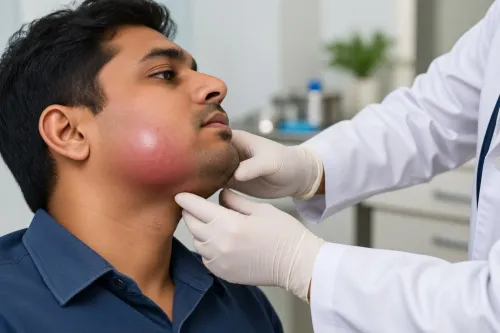
A clinician measures maximum interincisal opening—the gap between the upper and lower front teeth—then records deviation, joint sounds, bite changes, and the duration and frequency of episodes. Arthritis, fracture, ankylosis, dental infection, protective muscle spasm and fibrosis after cancer treatment can all mimic a disc-related lock. Treatment therefore follows the cause, not the label.
Ask for that diagnosis before considering jaw locking treatment in Chennai.
How does a clinician find the cause of restricted jaw opening?
A clinician identifies the cause by combining your history, measured mouth opening, joint and dental examination, and targeted imaging. They ask when the restriction began, whether it is intermittent or constant, previous trauma or dental treatment, clicking, pain, bite change, fever, swelling, cancer treatment, and whether opening has worsened.
| Cause | Examination clues | Imaging that helps |
|---|---|---|
| Displaced disc without reduction | Sudden closed lock, limited interincisal opening, deviation toward the painful side; clicking may have stopped | MRI shows disc position and joint fluid |
| Arthritis | Joint pain, crepitus, stiffness, tenderness, altered bite | CT or cone-beam CT shows erosion, flattening or osteophytes; MRI assesses soft tissue |
| Fracture | Recent impact, bruising, swelling, changed bite, immediate limitation | CT defines the fracture and displacement |
| Ankylosis | Long-standing, firm restriction with very little movement | CT or cone-beam CT shows fusion or severe bony narrowing |
| Muscle spasm | Painful tight muscles, variable opening, normal-looking joint imaging | Imaging may be normal; examination is central |
| Dental disease or infection | Tooth pain, decay, gum swelling, fever, foul taste or facial swelling | Dental X-rays; CT if infection extends into facial spaces |
| Post-cancer-treatment fibrosis | Gradually worsening opening after radiotherapy or surgery, tight scarred tissues | MRI or CT maps fibrosis and structural changes |
The clinician records opening in millimetres, lateral movements, deviation, joint sounds, muscle tenderness and occlusion. A TMJ disorder surgeon in Chennai should explain the working diagnosis, why MRI or CT is needed, and which finding supports each proposed treatment. A panoramic X-ray alone cannot reliably confirm disc displacement.
When should you try non-surgical jaw-locking treatment first?
Try reversible treatment first when the jaw is not locked open, you can drink and breathe normally, and examination has not shown a fracture, infection, ankylosis or another urgent structural problem. A painful acute closed lock can improve without open-joint surgery.
| Treatment | What it involves | Why it comes first |
|---|---|---|
| Soft diet and activity changes | Choose soft foods briefly; avoid gum, wide yawns, large bites and prolonged chewing | Reduces joint loading without changing the bite; continuing heavy chewing can prolong pain |
| Clinician-directed medication | Use an appropriate analgesic or anti-inflammatory plan recommended for your health history | Controls pain while the joint settles; self-medicating can cause stomach, kidney or bleeding problems |
| Guided physiotherapy | Follow exercises selected after measuring your opening, movement and cause of restriction | Restores movement gradually; the wrong exercise can increase muscle spasm or irritate a damaged joint |
| Selected occlusal splint | Wear a properly assessed appliance for a defined period | May reduce loading in selected patients; it is not a reason for routine tooth extraction, crown work or permanent bite adjustment |
Do not force the mouth open with your fingers, devices or a forceful stretch. A locked joint can contain an inflamed capsule, displaced disc or damaged bone, and aggressive opening can worsen inflammation, injure tissues or create a bite change.
Do not copy exercises from an online video: ask a TMJ specialist near me for a measured programme and clear stopping instructions. Arrange review if opening remains severely restricted, locking recurs or eating stays difficult.
Which TMJ operation matches the findings?
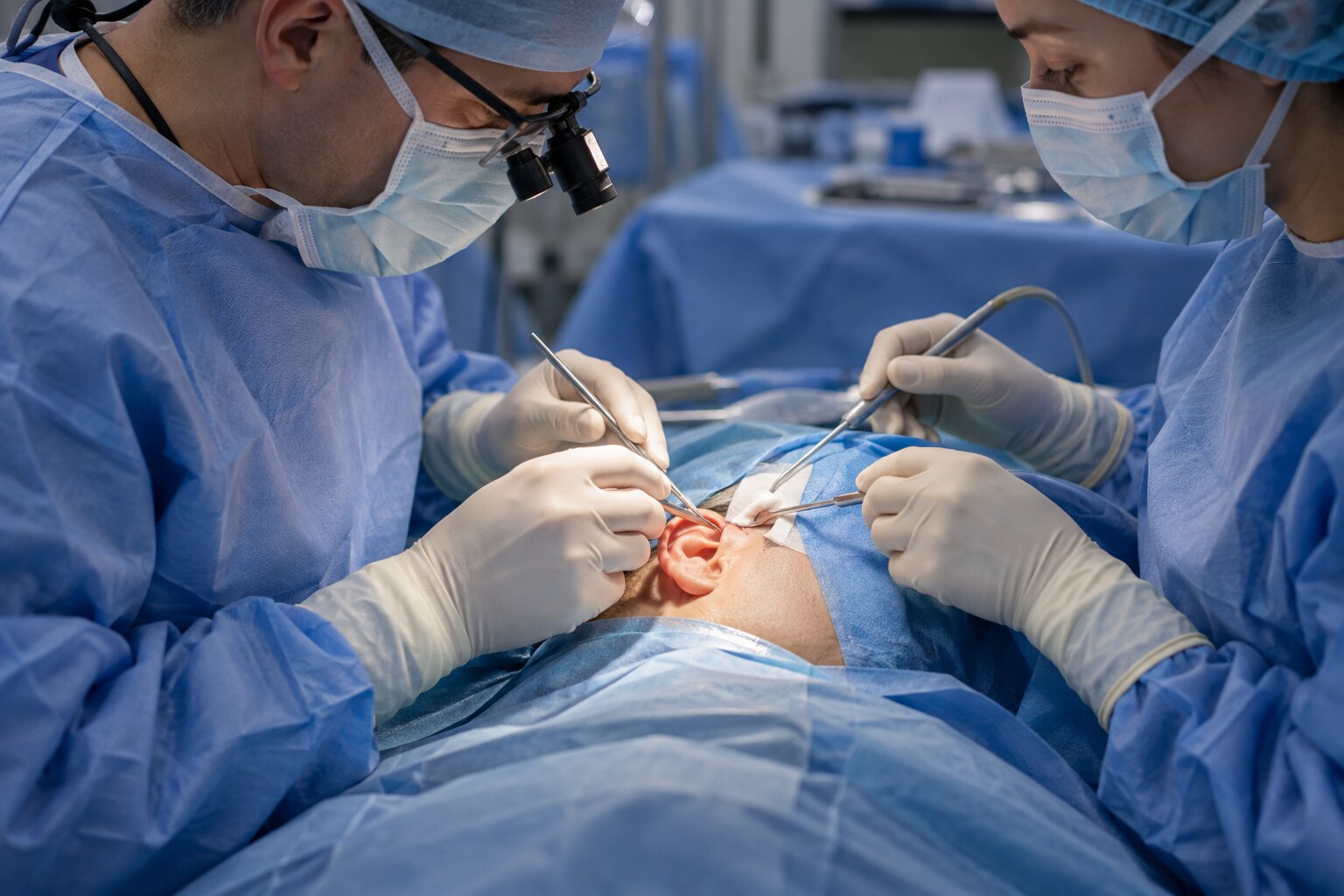
The operation should match the measured opening, bite, imaging and structural damage—not the label “locked jaw.” A person considering temporomandibular joint surgery in Chennai should ask for the working diagnosis and exact procedure in writing.
| Option | When it is considered | Limitations and risks |
|---|---|---|
| Arthrocentesis | Painful closed lock or inflammation when irrigation and manipulation may free the upper joint space | It uses needles, not reconstruction; improvement does not prove the disc returned to position. Infection, bleeding, bite change and recurrent symptoms remain possible. |
| Arthroscopy | Persistent joint pain, adhesions or mechanical restriction needing camera-guided treatment | It cannot correct every disc or bone deformity. Ear symptoms, facial nerve weakness, sensory change, limited movement or further surgery are possible. |
| Disc procedure or other open joint surgery | A repairable disc problem, damaged condyle, fracture, ankylosis or major structural abnormality | Recovery and scarring are greater; bite changes, nerve weakness, infection, stiffness and recurrent locking must be weighed. |
| Total TMJ replacement | End-stage joint destruction, severe ankylosis or deformity, or failed reconstruction | It is major reconstruction, not treatment for simple clicking. It can alter occlusion, requires rehabilitation and long-term follow-up, and can fail or need revision. |
Ask how many weeks of rehabilitation each choice requires and which symptoms it is expected to improve. A second opinion is sensible when surgery relies only on a panoramic X-ray, follows no reversible treatment trial, or promises that changing the bite will cure every symptom.
How should you decide whether TMJ surgery is right in Chennai?
Consent only after you can name the diagnosis, the proposed operation and the rehabilitation plan. If you are considering TMJ surgery for a locked jaw in Chennai, ask the surgeon:
- What is causing the lock, and what is my measured interincisal opening?
- Do I need MRI for the disc and soft tissues, CT for bone, or both?
- What reversible treatment should I try first, and what happens if I decline surgery?
- Is the recommendation arthrocentesis, arthroscopy, a disc or condylar procedure, or total joint replacement?
- How many of this exact operation do you perform, and what are the risks in my case?
- How could surgery affect my bite, facial nerve function, hearing or ear symptoms, sensation, scarring, movement and future need for surgery?
- What will rehabilitation involve, when can I eat normally, and who supervises exercises?
Seek a second opinion from another TMJ disorder surgeon in Chennai when the recommendation rests only on a panoramic X-ray, follows no trial of reversible care, promises to cure every symptom through bite alteration, or is not provided in writing.
It is also sensible when persistent pain could arise from muscles, headaches, neck problems or nerve sensitisation rather than the joint.
A Chennai facial and maxillofacial surgery clinic such as The Face Clinic can review your scans, examination measurements and proposed procedure, then test whether the diagnosis, operation and rehabilitation schedule fit together. Compare named procedures, not advertisements for “temporomandibular joint surgery in Chennai.”
Related service
TMJ Surgery (Temporomandibular Joint Disorders) Disorders of the jaw joint can cause chronic pain, diAiculty chewing, and locking of the jaw. View service → |
Frequently asked questions
What kind of jaw lock is an emergency?
An open lock, where your mouth remains stuck open, needs urgent assessment. Seek prompt care for a closed lock with severe pain, swelling, fever, injury or inability to eat or drink.
How does a clinician find the cause of restricted jaw opening?
The assessment includes your locking history, maximum mouth opening, side-to-side movement, bite, joint sounds, muscle tenderness and dental examination. X-rays, CT or MRI may be selected to assess bone, the disc and soft tissues.
When should non-surgical treatment come first for a locked jaw?
Non-surgical care is usually considered first when the joint is stable and there is no fracture, infection, tumour or severe structural damage. Options can include a soft diet, pain relief, physiotherapy and treatment for clenching.
Which operation is used for a locked jaw?
The procedure depends on the finding. Arthrocentesis or arthroscopy may be used for selected disc-related locking and inflammation; open joint surgery is reserved for structural problems such as adhesions, advanced joint damage or ankylosis.
How should you choose a TMJ surgeon in Chennai?
Ask whether the clinician routinely treats restricted jaw opening, which imaging supports the diagnosis, what non-surgical options remain, the proposed operation and its risks, recovery time and follow-up plan.
Keywords